(Kalimpong Journal Article)
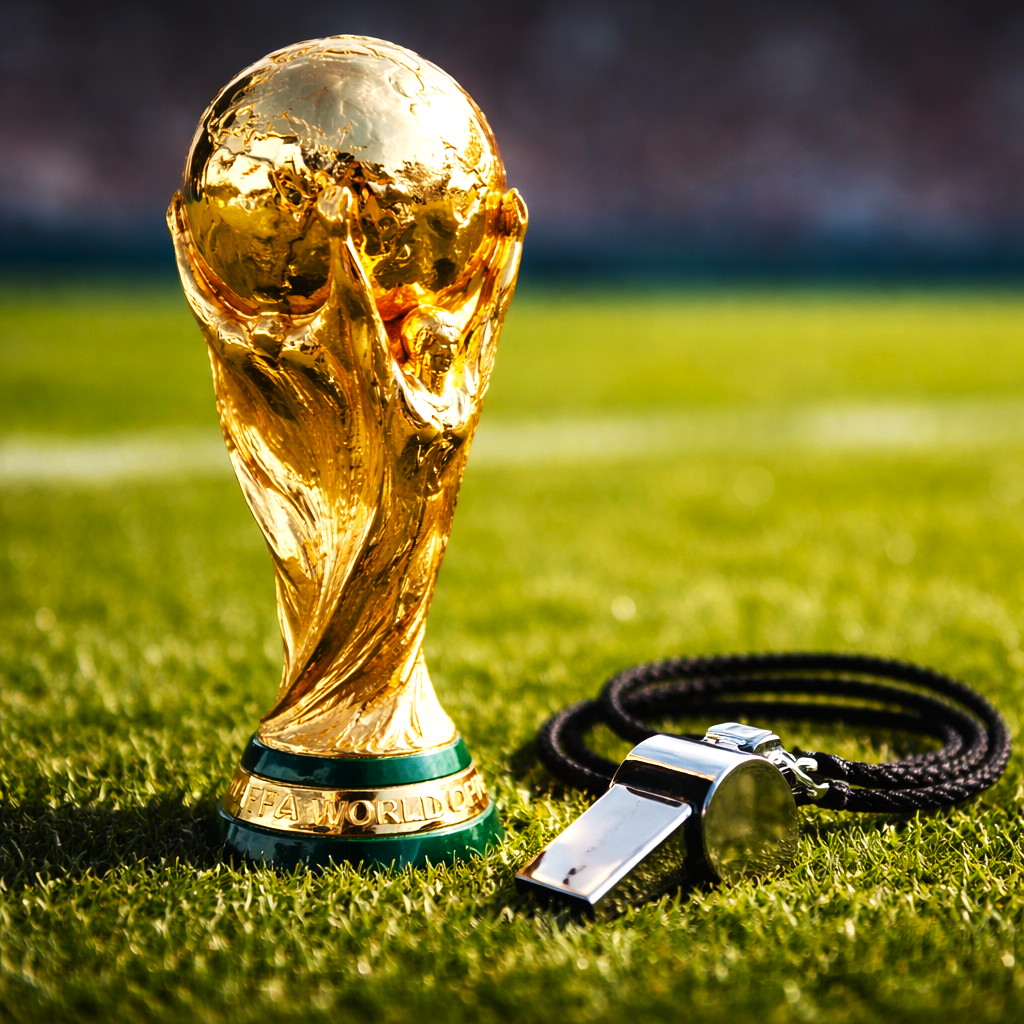
This morning, almost absent-mindedly, I searched for the schedule of the FIFA World Cup — not even realizing that 2026 was the next chapter waiting to unfold.
There it was.
2026.
And beside it, that familiar image, the trophy, gleaming in quiet authority. Not just metal and gold, but memory itself. The same trophy I had seen as a child, lifted to the skies, kissed with reverence by Diego Maradona at the Stadio Azteca, Mexico 1986.
For a second, nothing else mattered.
No headlines. No noise. No election post.
Just the year 2026. June. That iconic image. That feeling.
For a moment, the noise faded. The arguments, the headlines, the endless scroll of outrage—gone. In its place came something stronger.
Excitement. Summer. Nostalgia.
(The Noise We Live In)
Let’s not pretend things are calm.
In our own backyard, West Bengal elections have turned neighborhoods into fault lines. Villages divided. Friendships strained. Social media—especially Facebook—has become a battlefield of mockery, allegations, and endless “gotcha” moments.
Zoom out, and it only gets heavier. Talk of Iran–US tensions. Rising fuel prices. LPG concerns. Predictions of economic collapse thrown around like certainty by self-appointed experts.
Everyone seems to be shouting.
No one seems to be listening.
And Then, Football
And then there is football.
A game so simple, it feels almost foolish to take it seriously—until you remember how it makes you feel.
Football has always existed outside the noise. Long before it became a global industry, it was just people playing—whether in the ancient Chinese form of cuju or on the muddy streets of Europe.
It grew not because it was marketed well, but because it belonged to everyone.
And that’s the difference.
(The World Cup We Grew Up With)
There was a time—not very long ago, but it feels like another lifetime—when the World Cup meant something different.
Not just matches. Not just analysis.
It meant community.
Televisions were fewer, but people were more.
You didn’t watch alone. You gathered.
In someone’s living room. In a neighbour’s house. Sometimes even in schools where teachers quietly allowed a match to play during class hours.
Dozens of kids sitting cross-legged on the floor. Arguments over which team to support—often decided not by geography, but by who liked the cooler jersey.
“Brazil or Argentina?” was not just a question. It was identity.
Goals were not watched—they were experienced. Together.
A shout in one house would echo across the lane. You didn’t need commentary to know something had happened.
(The Giants, and Their Last Dance)
And now, as 2026 approaches, there is another layer to this feeling.
This could be the final World Cup for players who didn’t just play the game—but defined it.
Lionel Messi.
Cristiano Ronaldo.
Two names that carried an entire generation of fans with them. Not just in rivalry—but in excellence.
And alongside them:
Neymar Jr., still chasing that perfect ending.
Luka Modrić, defying time with quiet brilliance.
Thiago Silva, aging like a defender who refuses to fade.
Ángel Di María, always delivering when it matters most.
Robert Lewandowski, a relentless craftsman of goals.
Without realizing it, they became part of our timelines—markers of our own lives. You’ve either seen them play live or in the EA Sports Game 
School days. College evenings. Late-night matches we weren’t supposed to watch.
And now, we may be watching them say goodbye.
(A Small Escape That Still Matters)
Let’s be clear—football won’t fix what’s broken.
It won’t solve political divisions. It won’t lower petrol prices. It won’t end wars.
Even now, with global tensions in the background, uncertainties remain around participation and politics affecting teams like Iran.
But maybe we’re asking the wrong thing from it.
Football doesn’t fix the world.
It gives us a break from it.
And right now, that’s not trivial. That’s necessary.
(What We Might Have Lost)
Here’s the uncomfortable question.
Will 2026 feel the same?
Or have we changed too much?
Today, we watch alone. On personal screens. With notifications interrupting every moment. Even celebration feels… fragmented.
Back then, the experience was collective. Now, it’s curated.
We have better quality. Better access.
But do we have better moments?
(Maybe There’s Still Time)
Here’s the opportunity hidden inside this nostalgia.
What if we don’t just watch the next World Cup—but recreate it?
Call people over.
Watch it together.
Argue. Cheer. Lose your voice.
Make it messy again.
Because maybe the magic was never just in the game.
It was in how we experienced it.
(The Final Thought)
In a world that feels increasingly divided—politically, socially, digitally—the World Cup still offers something rare.
A shared moment. A shared experience.
And sometimes, that’s enough to remind us who we were… and who we still could be.
 When the first whistle blows in 2026, it won’t just start a match.
It will reopen a feeling.
And if we’re paying attention, we might just find that we needed it more than we realized.
———————-
 Opening Match
* June 11, 2026
* Mexico  vs South Africa
* Venue: Estadio Azteca, Mexico City
This is not random.
It’s symbolic.
Mexico opening the World Cup at the Azteca—the same stadium that witnessed Diego Maradona’s “Hand of God” and “Goal of the Century.”