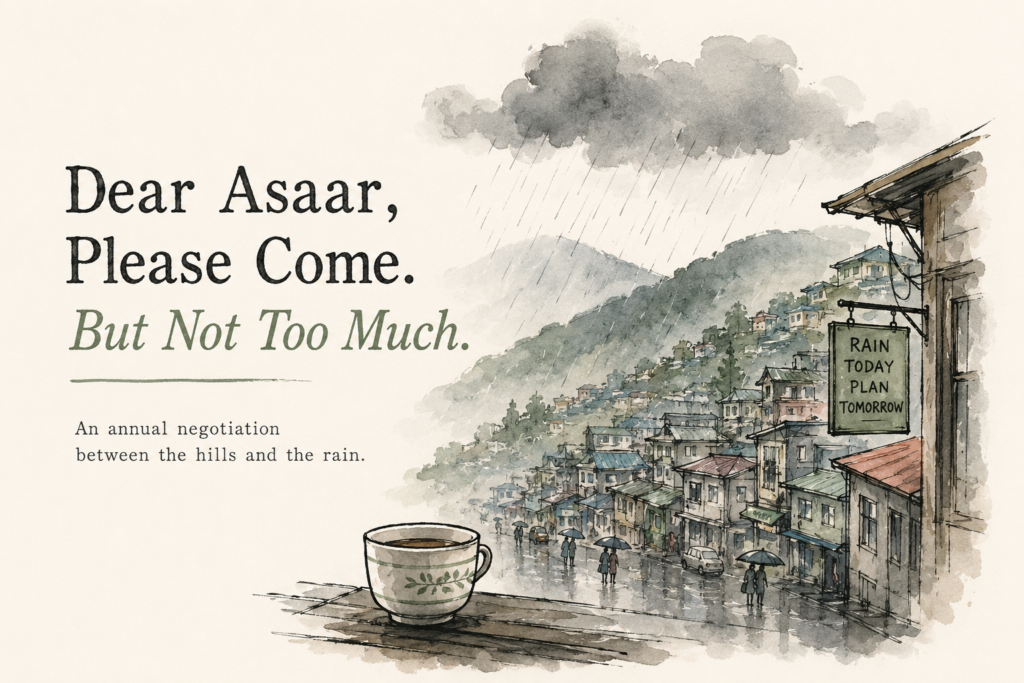
Few months in the Nepali calendar are as fondly awaited as Asaar.
We sing about it. We write poems about it. We wait for it. We pray for it.
And then, the moment it arrives, we begin complaining.
Every year, the hills conduct the same negotiation with the weather. We ask for rain. We get rain. We ask for less rain.
The rain couldn’t care less.
Perhaps no other month inspires such contradictory emotions. We need the rain. We fear the rain. We depend on it. We resent it. The same downpour that replenishes springs can also bring landslides. The same cloud that promises relief can ruin a carefully planned day. Asaar arrives carrying both promise and threat.
And so we welcome it cautiously.
For a few days, everybody is delighted. Kancha Daju has spent weeks watching the sky. His paddy fields are finally getting the rain they need. Somewhere across the valley, Kanchi Kaki is quietly optimistic about her maize. The hills regain their colour. The air feels cleaner. Tea somehow tastes better.
Then somebody notices the laundry and reality, as it often does, re-enters the conversation.
Roads become something to discuss before leaving home. Meetings acquire a degree of flexibility. Plans that seemed perfectly reasonable in May begin to look slightly ambitious in June.
Asaar has a habit of reviewing everyone’s plans.
Usually unfavourably.
The MLA is delayed. The businessman is stranded. The tourist is stuck.
The rain couldn’t care less.
One afternoon, a patch of blue sky appeared over Deolo and optimism returned with it. Umbrellas disappeared first. Then the laundry returned. Shop shutters lifted a little higher. By afternoon, plans that had seemed doubtful in the morning were being discussed with renewed confidence.
Down in town, a taxi driver and a tourist were discussing waiting charges with increasing conviction. Neither appeared willing to compromise. A few minutes later, the rain arrived and the discussion was postponed by mutual agreement.
It is difficult to say who won the argument.
The rain certainly didn’t lose.
Confidence returns quickly in the hills.
Not for the last time.
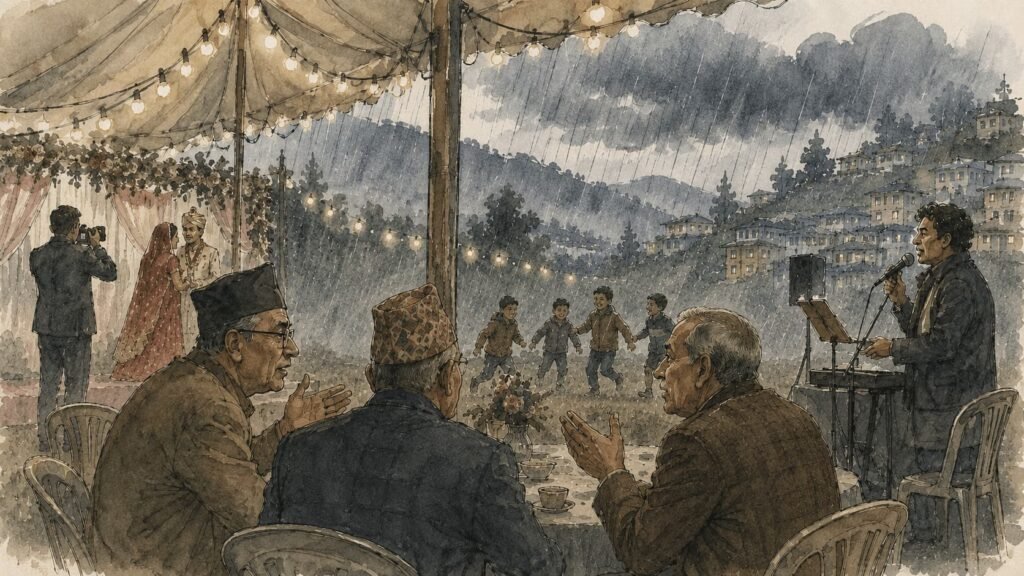
I found myself at a wedding one evening in the middle of Asaar. The bride and groom were somewhere beneath a canopy of lights. The photographer was working. The children were running. Every few minutes, somebody glanced beyond the tent. The darker the clouds became, the more serious the conversation.
A few tables away, three uncles were discussing rainfall patterns. One was convinced the monsoon arrived later than it used to. Another blamed global warming. A third introduced El Niño into the conversation. The debate grew steadily more technical. Somewhere behind them, Bipul Da was singing about Asaar through an overly enthusiastic karaoke singer.
Neither seemed capable of influencing the weather.
Beyond the tent, the rain continued according to its own understanding of the matter.
A few minutes later, somebody checked a weather app. Somebody else checked the sky.
Neither appeared entirely reassured.
It strikes me that Asaar produces these conversations every year. Not because people enjoy discussing the weather. Because people enjoy believing they understand it.
Tomorrow morning, somebody will announce that the weather is improving. Somebody else will disagree before breakfast.
Both will probably be interrupted by rain.
— Adwitiya Chhetri
From Notes From Kalimpong, first published in Kalimpong Journal.
© 2026 Adwitiya Chhetri. This work forms part of the forthcoming collection Notes From Kalimpong. All rights reserved. No adaptation, republication, narration, recording, translation or derivative work may be made without the author’s prior written permission.